Crystal Learning · Crystal Facts
How Do Crystals Form? Geology for Beginners
How do crystals form? A plain-English guide to atoms, cooling magma, mineral-rich water and why slow growth often makes bigger crystals.
The Crystal Store · 1 September 2026
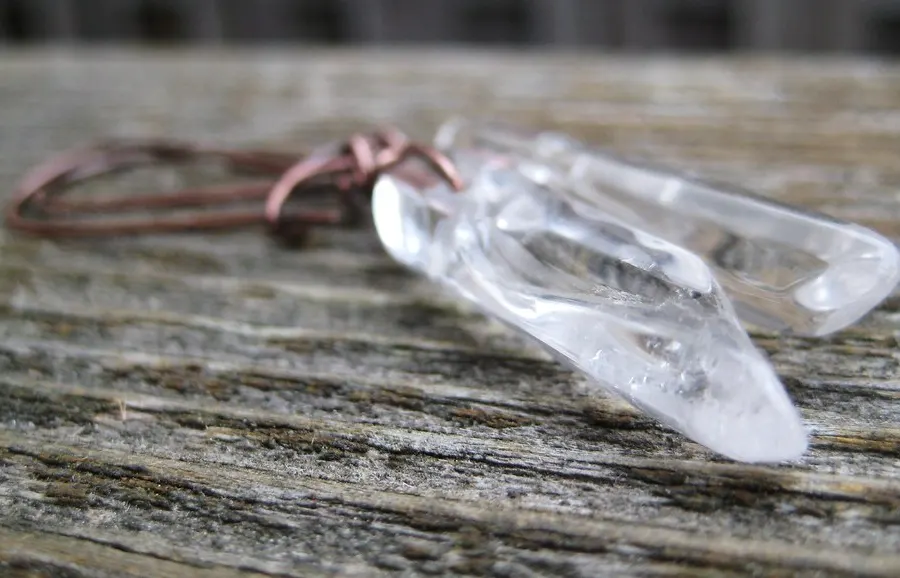
How do crystals form? Crystals form when atoms settle into a neat, repeating pattern as a liquid, a solution or sometimes a gas changes conditions. Most of the crystals people collect grew from cooling molten rock or from mineral-rich water moving through cracks and hollows underground.
That simple idea explains everything from a grain of salt to a metre-tall amethyst geode.
What actually makes something a crystal?
Wikipedia’s crystal overview defines a crystal as a solid whose atoms, molecules or ions are arranged in a highly ordered pattern that repeats in all directions. That repeating arrangement is called a crystal lattice.
The key point is that “crystal” describes what’s on the inside, not the outside. Flat faces often appear, but they aren’t required. Table salt shows how inner structure can shape the outside: its cubic arrangement of atoms is why salt crystals form cubes.
Glass makes a useful comparison. It can look just like a clear crystal, but it has no regular atomic order. The same goes for obsidian, a natural volcanic glass formed when lava cools so fast that atoms can’t arrange into crystals.
The main ways crystals grow
| Route | What happens | Examples |
|---|---|---|
| Cooling melt | Minerals crystallise as molten rock cools | Feldspars such as labradorite |
| Mineral-rich water | Dissolved material builds up on surfaces in cracks and cavities | Amethyst in geodes |
| Evaporation | Water leaves, and dissolved minerals are left behind | Salt and selenite |
| Heat and pressure | Existing rock changes without fully melting | Garnet |
Real geology is often messier than a table, and one mineral can form in more than one way, but this gives you a good mental map.
Why slow growth matters
The result depends on conditions such as chemistry, pressure, temperature and how quickly they change. As a general rule, slow and steady growth gives atoms more time to find their places, which can allow larger, better-formed crystals. Rapid change tends to produce tiny grains or no crystals at all.
Compare obsidian with a coarse crystal point. Both can begin with similar raw ingredients, yet the speed of the process helps explain why one is glass while the other has visible faces.
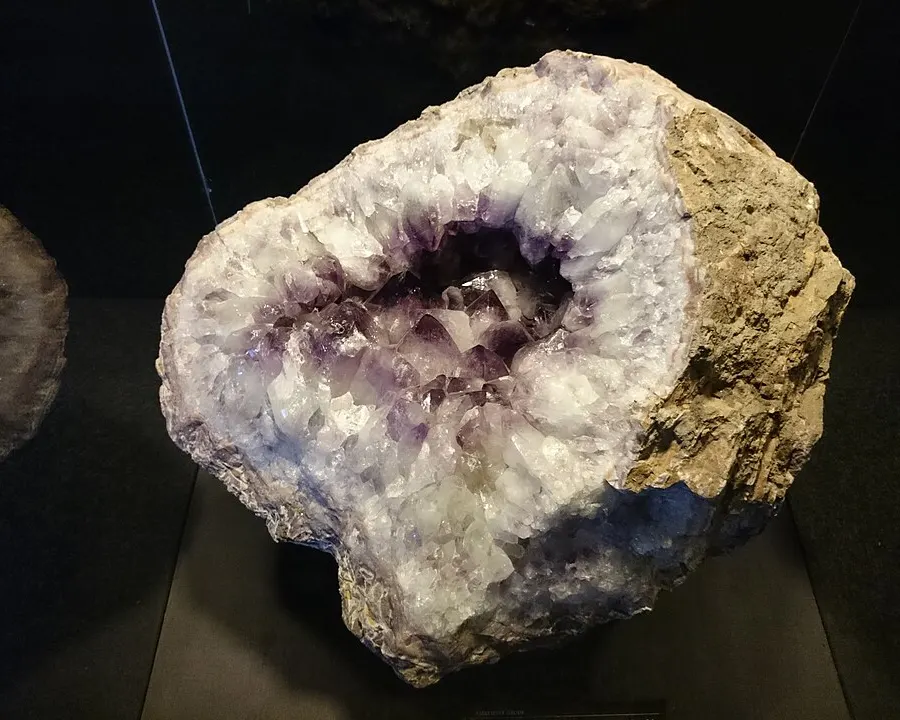
Why crystals have flat faces
As a crystal grows, new atoms attach most easily to rough, unstable areas. Smooth, stable faces end up expanding until they dominate the outside, which is why so many crystals have such clean geometry. No one has cut these faces. They come from the way the atoms stack.
Wikipedia’s overview also explains that crystal structures fall into seven crystal systems, based on their symmetry. It’s why quartz, which is trigonal, grows differently from a cubic mineral like pyrite or fluorite.
Why crystals have different colours
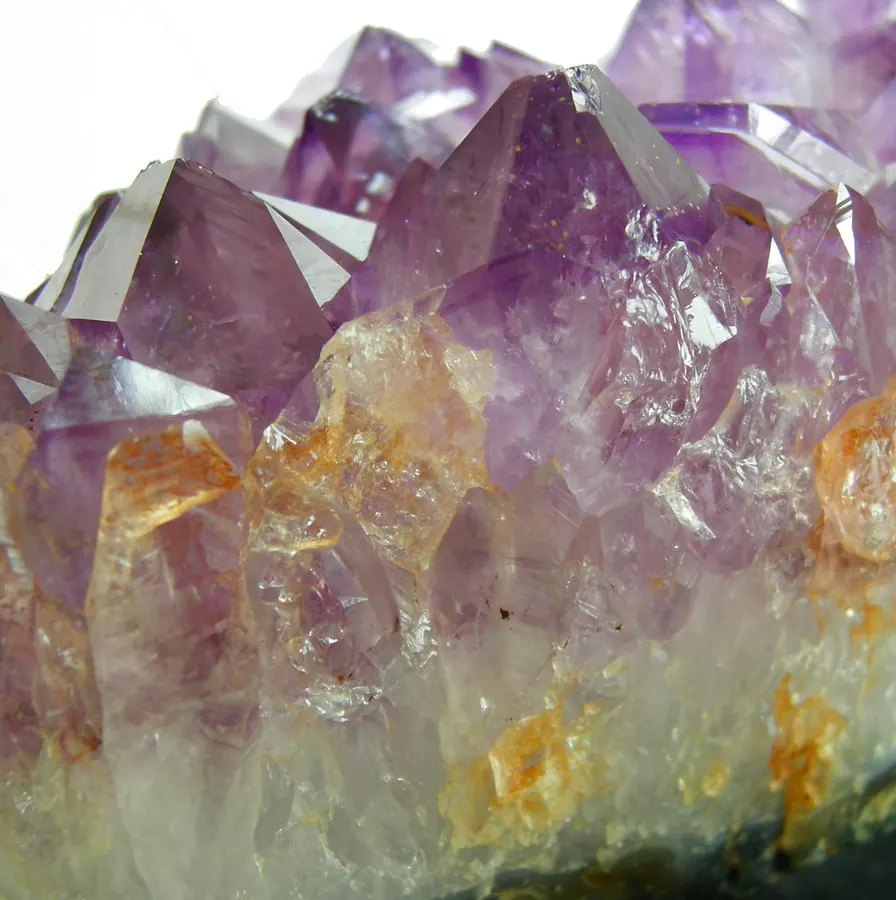
Pure quartz is colourless. Colour often comes from trace elements, tiny inclusions or natural radiation. Amethyst’s purple is a well-known example, and our guide to how amethyst geodes form explains that story.
See it for yourself
You can grow crystals at home, which is a great way to understand the process.
- Dissolve salt or sugar in warm water until no more will dissolve.
- Pour it into a clean jar, with an adult’s help if children are involved.
- Hang a string from a pencil across the jar’s top.
- Leave it somewhere undisturbed for several days.
- Check the result with a magnifying glass.
If you know a young geologist, our Mini Explorers range is designed around discovery like this.
Common myths about crystal formation
- “Crystals are always sharp.” Rounded crystal clusters are common too, and tumbled stones get their shape from polishing, not growth.
- “All crystals are rare.” Geology.com notes that quartz is the most abundant mineral at Earth’s surface.
- “Lead crystal is crystal.” According to Wikipedia, it’s actually a type of glass.
- “Bigger means older.” Size depends on conditions and available space, not simply age.
Crystals, minerals and rocks: what’s the difference?
These words get mixed up all the time, so here’s a quick guide.
- A crystal is any solid with a regular, repeating atomic structure.
- A mineral is a naturally occurring solid with a definite chemical make-up. Most minerals are crystalline. Quartz is one example.
- A rock is a mixture of minerals or other materials. Granite, for example, contains several minerals, including quartz.
Not everything sold as a crystal fits neatly into these groups. Whitby jet is fossilised wood, and obsidian is a natural glass. Our glossary of crystal terms explains more of the words you’ll see in shops.
Frequently asked questions
How long do crystals take to form?
It varies widely, from hours for salt in a jar to much longer spans in nature. The rocks hosting some crystals are many millions of years old, but exact growth times are usually unknown.
Is ice a crystal?
Wikipedia notes that ice is usually polycrystalline, meaning it’s made up of many tiny crystals fused together. The word crystal itself comes from the Ancient Greek for both ice and rock crystal.
Are all rocks made of crystals?
Many are made of tiny crystals or grains, but some, such as obsidian, are natural glass and have no regular crystal structure.