Holistic Living · Crystal Learning
What Are Chakras? Origins, Meaning and Modern Use
What are chakras? Their origins in Indian texts, how the modern seven-chakra system developed, and what they mean for crystal lovers today.
The Crystal Store · 22 September 2026
What are chakras? In the yoga and tantric traditions they come from, chakras are energy centres said to run through the body, from the base of the spine to the crown of the head. They have a long, surprisingly complicated history, and the familiar seven-chakra rainbow is far more recent than most people think. There’s no scientific evidence that they physically exist.
Knowing that history makes the tradition more interesting, not less.
What does “chakra” mean?
The word comes from Sanskrit and means wheel. According to Wikipedia’s chakra article, when it appears in the ancient Vedas, it means a wheel or a king’s sphere of power, not a psychic energy centre.
Where the idea came from
The energy-centre concept developed gradually. Wikipedia says that hierarchies of energy centres appear around the 8th century CE in Buddhist tantric texts, and that Hindu tantric texts later expanded on them. Scholars still disagree about whether earlier Upanishads describe chakras at all.
There was also no single fixed system:
- Medieval Buddhist texts mention four chakras.
- Other Buddhist traditions vary between three and six.
- Hindu sources give various numbers, typically four to seven major ones.
The seven-chakra version, six plus the crown, became the best known.
How the modern system took shape
The rainbow chart on a yoga studio wall is largely a modern creation. Wikipedia traces it through:
| When | What happened |
|---|---|
| 1880s | The idea reaches the West through H. P. Blavatsky and other Theosophists |
| 1919 | Sir John Woodroffe’s The Serpent Power draws attention to the seven-chakra model |
| 1927 | Charles W. Leadbeater’s The Chakras adds rainbow colours |
| Later 20th century | New Age writers and energy healers add further links |
One writer, Kurt Leland, argues that the colours and qualities first appeared together only in 1977.
The seven chakras in brief
| Chakra | Sanskrit | Location | Colour | Themes |
|---|---|---|---|---|
| Root | Muladhara | Base of spine | Red | Grounding |
| Sacral | Svadhisthana | Below navel | Orange | Creativity |
| Solar plexus | Manipura | Upper abdomen | Yellow | Confidence |
| Heart | Anahata | Centre of chest | Green or pink | Love |
| Throat | Vishuddha | Throat | Blue | Communication |
| Third eye | Ajna | Between brows | Indigo | Intuition |
| Crown | Sahasrara | Top of head | Violet or white | Awareness |
See each chakra’s page for the stones traditionally paired with it, or read our seven chakras and their crystals.
Do chakras exist?
Wikipedia is clear: there’s no scientific evidence that chakras exist, and there’s no meaningful scientific way to measure them. They aren’t physical structures that you could find in the body.
That doesn’t stop them being valuable to many people as a symbolic map for reflection and meditation. It simply means they’re a belief system and not anatomy. Any claim that a practitioner can diagnose illness from your chakras, or that “balancing” them can treat a condition, should be treated with caution.
The NHS advises seeing a GP about symptoms that persist or keep coming back, and not stopping prescribed medicine without first talking to your doctor.
How crystals became part of it
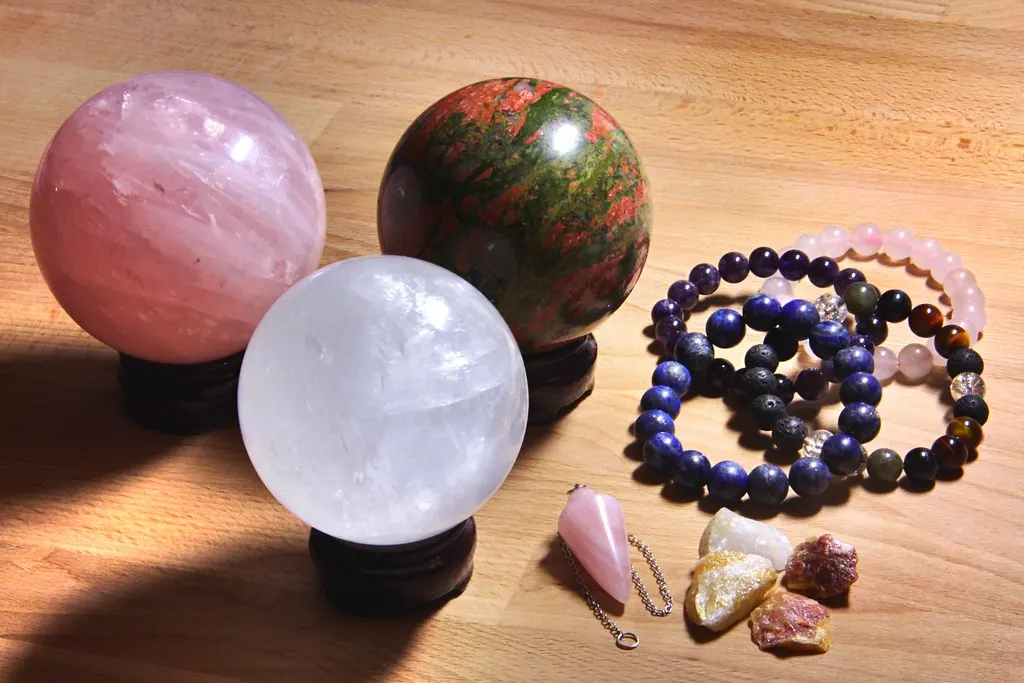
Linking stones with chakras is a modern practice, and it’s usually based on colour: red stones with the root chakra, green and pink with the heart and so on. There’s no ancient rulebook for this, and different guides pair different stones. That’s why it’s fine to treat it as a personal, creative tradition.
A simple way to explore chakras
If you’d like to try it as a form of quiet reflection:
- Sit comfortably somewhere quiet.
- Breathe slowly for a few minutes.
- Bring your attention to each location in turn, from the base of the spine upwards.
- Notice what you feel, without judging it. The NHS’s mindfulness page describes this kind of moment-by-moment attention.
- Finish slowly, and take a moment before getting up.
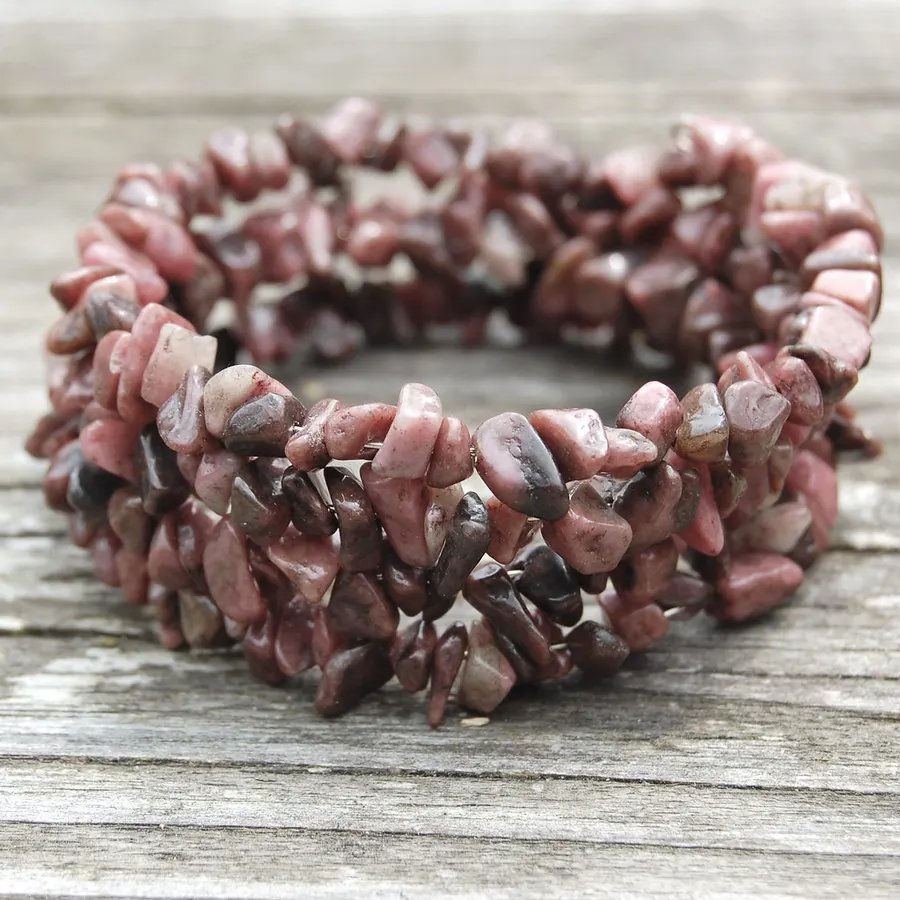
You might hold a stone from our Crystal Guide if you enjoy that, or wear a chakra bracelet. Some people like to begin with a stone chosen by colour. The retailer guide from Crystals.com has further beginner-friendly suggestions.
Respecting the source
Chakras come from living religious and spiritual traditions in South Asia. Reading about their origins, and acknowledging that the modern version differs from older texts, is a simple way to show respect for where they came from.
Common questions about the seven chakras
People often assume that the seven-chakra chart is ancient and universal. It’s more accurate to think of it as one version of an idea that has changed many times. The same stone, colour or theme can also be paired differently from one guide to the next. So if two sources disagree, neither is necessarily wrong, as they may simply be following different modern traditions. If this interests you, the history on our chakra hub and in our other guides is a good place to start.
Frequently asked questions
How many chakras are there?
It depends on the tradition. Seven is the best-known number today, but historical sources give different numbers.
Are chakras real?
There’s no scientific evidence that they physically exist. They’re part of a spiritual and symbolic tradition.
Can crystals balance chakras?
That’s a belief in modern crystal practice and it hasn’t been scientifically shown. If you have a health concern, see your GP or another qualified professional.